Scratch DJ Academy: Mixmaster Classes are in Session.
Text by Shruti Pal. Images by Rosie Simmons.
“There used to be a bartending school here but I guess it’s gone,” murmurs a middle-aged woman, as she walks past the doors of 209 Chestnut St. She seems disappointed at the loss of a hip icon of Old City.
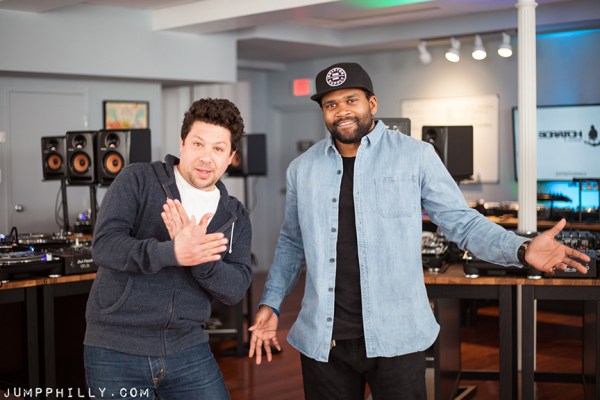
“There also used to be an art gallery here,” says Cosmo Baker, director of the newly opened Scratch DJ Academy in Philadelphia, after hearing about the woman’s words.
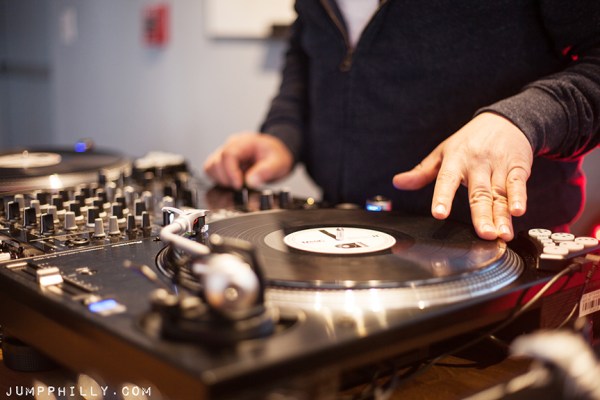
These days, the Academy offers an opportunity for those looking to hone their DJing skills or get an education in music production. Classes range from DJ-101 (Beginner DJing) to M-202 (Intermediate Mixing). They also offer private lessons.
Scratch DJ Academy started in New York City almost 15 years ago when Rob Principe and Jam Master Jay came together in hope of making turntablism more accessible. Now, in 2016, Scratch DJ Academy has operations in six of America’s most prominent music scenes: New York, Los Angeles, Chicago, Miami, Atlanta and now, Philadelphia.
As a renowned DJ, music producer and South Philly native, Baker has played shows everywhere, from Puerto Rico to South Korea. He is a part of a long, storied lineage of DJs in Philadelphia. DJs Cash Money, Tat Money, Jazzy Jeff, Spinbad, Too Tuff, Cosmic Cat, Lady B, Josh Wink, King Britt and DJ AM – all with national and international recognition and respect for their contributions to the art of turntablism – hail from Philadelphia.
“What people don’t know about the Philly DJ scene is that it is alive and well,” says Rich Medina, a DJ and instructor at the Academy, who has built a loyal worldwide following. He says that many people don’t realize that Philadelphia’s DJ scene is the father of all other DJ scenes.
 Baker knew Philadelphia was an obvious choice when he found that Colin Kelly, vice president of Scratch, was looking for the next city to expand in.
“There are kids playing in warehouses,” says Baker. “All they want to do is belong, and they find that in Philadelphia’s DJ community. There are also 16-year-old girls in New Jersey who don’t know a thing about turntables, but want to, because they know Skrillex.”
With the intention of both drawing attention to the scene here and capitalizing on the potential of its talent, Baker put in the legwork to open a Scratch DJ Academy in his hometown.
The Academy, which opened in January, is full of DJ equipment in what looks like an upscale warehouse setting. Almost every wall features funky and colorful pieces by Mike Davis from Burlesque of North America.
Baker wanted to create a space that would appeal to anyone – young or old, novice or advanced, guy or girl. Baker also hopes to contribute to the Philadelphia DJ community by making the Academy accessible and useful to everyone.
“The indie/hipster collective, the Gayborhood, the working adults, the professionals,” Baker says about the target market, “there is a place for everyone here.”
Baker hopes that the diversity of the instructors – from Regina “Gun$” Garcia to Rich Medina – will encourage people from all walks of life to feel comfortable in the Academy.
Nick Spinelli, a wedding DJ in Philadelphia, has been very satisfied with his experience as a student at Scratch.
“We are learning from the best of the best here,” says Spinelli. “It’s just insane. There’s just so much to learn. It’s the hands-on approach – you have some of the biggest names in the industry picking up on your mistakes and teaching you how to fix them.”
“We have different teaching styles, and different teaching experience,” Medina says. “It’s like a football team. All of us bring a different skill set to the table.”
Baker was able to take his turntable dreams and turn them into a career. He hopes his story can inspire others while the Academy helps them achieve their goals. World tours as a party-rocking DJ might not be everyone’s goal, but now students of the culture can get an education and the experience to make it possible.
New school and old school are in session.
JUMP Presents the Red Bull Sound Select Featuring Restorations, Thrills and Mumblr @ The Foundry on 8/18.
We’re super excited to announce our next big Red Bull Sound Select show that we curated: Restorations will headline The Foundry on August 18 with Mumblr and Thrills adding to the party.
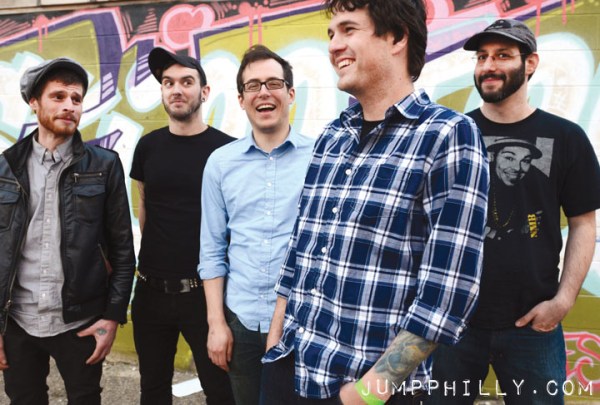
It’s been a few months since Restorations (in the picture above, which ran with the story we wrote about the guys in 2012) did a Philly show. Their next local show after ours, in October at the Church, is already sold out. Come out and catch these Philly punks for only $3 (if you RSVP here).
The emo punks in Mumblr did a show for us in 2014 and the last thing we (barely) remember about that night was one of the guys dancing with a potted plant from the green room as Spank Rock blew away the crowd and had everyone dancing. Mumblr (below) is super fun.
Thrills will be debuting work from their brand new album, which just dropped last month. Frontman Michael Mullin also performs in Vacationer and some of the other Vacationer guys are in the band as well.
Our past Sound Select shows have been massive parties (see pics from some of our past shows with Plastic Little, RJD2, D.R.A.M. and Pissed Jeans by clicking the links). Our January show at The Foundry, with Vacationer, Weekender and Queen of Jeans, sold out and people had to be turned away at the door.
So, please RSVP here ASAP and show up early!
Video Premiere: “Fools” by CLOAKZ.
CLOAKZ is a new band, founded by Zachary Ciancaglini and comprised of musicians who play in other bands. They released their debut EP, Semi-Autographic, in April and we’re premiering their second video from the album today.
We talked to Zachary after we debuted their first video a few weeks ago. See the Q&A here.
This Is Hardcore XI: “I Get Choked Up Thinking About It.”

Text by Tim Mulhern.
Jesus Piece guitarist John DiStefano helps ship his band’s merchandise to their fans.
Keeping track of the addresses of the orders ready to ship – an increasing number of them from states across the country – is solid evidence the rapid rise in popularity the band has experienced since forming in July of 2015.
“I’ve never been in a band that has had such a reach before,” DiStefano says.
 A love of hardcore and metalcore brought DiStefano together with vocalist Aaron Heard (right, shot by Mina Lee), guitarist David Updike, bassist Anthony Marinaro and drummer Luis Aponte to form Jesus Piece. The band’s brand of abrasive beatdown hardcore landed them spots on major festivals and a devoted fan base across the country.
Their success, the band says, started with support from their friends.
“This band was started just for fun with friends playing music,” Updike says. “I think right now, what it was, what it is, how it’s going to be, is always friends-oriented.”
Like many bands in Philadelphia, Jesus Piece burst onto the scene playing small, DIY basement shows in and around the city limits, but quickly traded those spaces for larger, out-of-town festival stages.
In January, the band made their debut at FYA Fest in Tampa, Florida. A two-week tour in June with their friends in Buried Dreams, a hardcore band based out of Boston, brought both bands to Sound and Fury Fest in Los Angeles.
Jesus Piece’s success has not come without challenges. The band is learning to communicate as a group and Updike says he and his bandmates continue to learn more about one another each day.
“It’s more of a relationship than a friendship,” Heard says.
This weekend, Jesus Piece will perform at the annual This Is Hardcore Fest on the same day as straight-edge hardcore giants Turning Point.
“To think about me as a teenager and going to This Is Hardcore and seeing these bands and now it’s like, we’re on it,” Updike says. “I never in a million years thought that would ever happen.”

Joe McKay, known in the scene as Joe Hardcore (pictured above in a shot by Jeff Fusco), started This Is Hardcore in 2006 at the now defunct Starlight Ballroom. The fest blossomed into a four-day showcase with performances at the Electric Factory and Union Transfer.
Ten festivals and more than 200 bands later, classic hardcore legends Youth of Today, Integrity, Gorilla Biscuits and Turning Point top this summer’s bill.
“It grew because what we did was honest,” McKay says.
As the popularity and size of the fest grew, so did the number of people McKay looked to for help.
“I definitely think as we diversified who was involved in the festival, we grew to be a more well-oiled machine,” McKay says.

In 2009, Sunny Singh (pictured above in a shot by Mina Lee), founder of hate5six, a database for live hardcore and punk videos, approached McKay to assist with documenting the festival. After parting ways with the company who previously filmed the fests, McKay asked Singh to return each year since.
Through filming shows and festivals in Philadelphia and around the world, Singh continues a long tradition of visual documentation within punk scenes.
“I got into hardcore punk from just watching live recordings of VHS tapes,” Singh says. “So for me to be able to pay that forward, makes it all worth it.”
Madi Matthews, the creative director for This Is Hardcore, spent summers attending the fest long before she began working closely with McKay on graphic design and branding four years ago.
This year, Matthews’ band Year of the Knife performs at the fest for the first time.
“Integrity is one of the bands we are most inspired by, so it’s just going to be crazy to open up for them,” Matthews says.
Honoring hardcore’s past and anticipating its future remains the focus of This is Hardcore each year.
The fest allows a newer band like Jesus Piece to realize dreams they didn’t think would turn to realities so soon after forming.
“It’s genuinely surreal to all of us,” Heard says. “It went from playing a basement to playing places that a lot of bands have been trying to do for a long time.”
Furthermore, reunions like Turning Point’s provide newer generations of hardcore fans with an opportunity to appreciate the genre’s rich history.
McKay emphasized the importance of the band’s closing performance to the Philadelphia area, particularly within older generations of hardcore fans who spent their formative years listening to their music and attending their shows.
“I get choked up thinking about it,” Mckay says. “I don’t think we’ll ever do anything better.”
Here are a few pics from past This is Hardcore fests:


 Text by Scott Bailey. Images by Ed Schick.
Rock might not be dead but you could argue that it smells funny. It’s more difficult to find, given all of the choices available in this Spotify/iTunes/YouTube world. But it’s out there.
Last week, Underground Arts hosted two bands that are working hard to make their statement that rock is alive and well. The Stone Foxes supported The Temperance Movement on a hot July night in the city, and the fans who attended were rewarded with an old-school rock show. No frills, no synthesizers, no Autotune. Just loud, ballsy guitars and gritty singers with a little attitude.
San Francisco’s The Stone Foxes got the night started with 45 minutes of fun. Playing a set that featured songs from their four-album career, they got the crowd warmed up with “Everybody Knows,” a blues-rock number from their 2013 album, Small Fires.
Featuring a greasy guitar riff from Ben Andrews, lead singer Shannon Koehler quickly got the joint moving with powerful vocals and harmonica. From there, the multi-talented band loosened up and began demonstrating their versatility: Koehler singing, playing a mean blues harp, and drumming up a storm; brother Spence Koehler playing rhythm guitar, bass and singing lead; Ben Andrews playing funky lead riffs and taking a surprisingly sweet solo on violin at one point. All the while, Elliot Peltzman held it all together playing an authentic Fender Rhodes organ (i.e. not a keyboard patch or iPad sound sample) and Vince Dewald provided the bottom end with his groovy Fender P-bass. Drummer Brian Bakalian rounded out the band’s sound with powerful drums that drove the band’s rhythms and kept the crowd moving. By the time
By the time the Foxes got to their most recognizable tune, a cover of Slim Harpo’s “I’m a King Bee,” the band was covered in sweat and the crowd was loose and loud.
The Foxes were the opener for this show but they clearly can hold their own on-stage. They very quickly and convincingly won over a crowd that was there to see the headliner, The Temperance Movement.


The Temperance Movement hit the stage to the guitar riff from “Battle Lines,” off of their new album, White Bear. Vocalist Phil Campbell grabbed the microphone and began to snarl out the opening lyrics with a swagger that was reminiscent of Faces-era Rod Stewart. You could literally feel the air move as Damon Wilson pounded out the beat. And when Nick Fyffe joined in on bass, you couldn’t help but tap your foot, shake a leg or move your hips.
From there, it was a non-stop onslaught of blues-rock. No stage chatter, no cajoling the audience, no let-down. Just an in-your-face rip through 15 songs, including all but two from their current release. Playing to an enthusiastic crowd that sang along to every song and was clearly enjoying themselves, TTM came back out and played “Serenity” for their encore.
If, as was argued at the time, The Black Crowes were attempting to bring English blues-influenced rock like that of the Faces, The Rolling Stones and Humble Pie back to the United States, then you could definitely say that Scotland’s The Temperance Movement is stealing it back. The band has that tight-but-loose feel that makes it clear that they’re a well-oiled machine but that danger lurks ahead. Guitarists Paul Sayer and Matt White complement each other like brothers, never getting in each other’s way and bringing different approaches to the table. Add their rootsy edge to bassist Fyffe’s funk -drawn from playing with Jamiroquai – and you get a unique, rhythm-driven sound that gives Phil Campbell plenty of room to work with. Veteran drummer Damon Wilson isn’t flashy, but brings power on every song and pushes the band’s energy.
Campbell is a compelling front man. A gravelly rasp that channels both the aforementioned Rod Stewart and the late singer from Stone Temple Pilots, Scott Weiland, with attitude and moves like Jagger that Adam Levine could only dream of. It’s relatively easy to categorize this band as a roots-revival 60s rock band but that would ignore the modern edge that they bring to their music and show. Their no-frills presentation won’t work for every act but they have the talent and stage presence to entertain an audience and get them on their feet.
Tho show made it apparent that rock clearly isn’t dead. It’s alive and well at venues like Underground Arts. You may not hear it on the radio like we once did, but bands like The Stone Foxes and The Temperance Movement are making sure that a generation that expects light shows and costume changes understands that a tight band with attitude are all you need to captivate an audience.


 Photos by Justin Swan.
Many thanks to all who came out for the JUMP curated Red Bull Sound Select show last Thursday at The Foundry featuring D.R.A.M. (which stands for Does Real Ass Music). It was a really great night.
DJ Matthew Law had the party going from the minute the doors opened. Aime kicked off the show with a brief but powerful set with music from his latest project, The Book of David. Georgia’s Xavier Omar followed with a soulful sing-along performance. North Philly’s Grande Marshall hit the stage and performed tracks from his latest album, My Brother’s Keeper, as well as deep tracks from his previous two projects.
D.R.A.M. was the highlight of the night, however. He hit the stage smiling and dancing, and he had the entire packed crowd bouncing all night. People sang along with his direction and toward the end of his set, he jumped into the crowd and bounced along with everyone. His “Broccoli” track may be the catchiest song of the summer.
We’ll announce our next Red Bull Sound Select show this week. Stay tuned for details.


The Return of June Divided.

Text by G.W. Miller III. Photos by Charles Wrzesniewski.
Melissa Menago appears so sweet and tiny, standing on the wide stage in a black dress with her faded fuchsia-colored hair.
There is a drum set behind her and a keyboard to her right, as well as several microphone stands and loads of other gear ready for the evening’s headliner who will follow her performance. But she’s alone up there right now, demurely smiling while holding her little ukulele.
“Are any of you in love?” she asks the crowd of a few hundred people gathered in this secluded dell in suburban New Jersey. “Are you here with your loved ones? Some of us hate you.”
There is an uncertainty to the laughter that momentarily ensues.
“I don’t write happy songs,” Menago continues. “This next one is for anyone who has ever had their heart broken.”
And she breaks into a new song, “Eye to Eye,” which she has slated for a solo album in the future.
“I wanna love you, wanna hate you, I want everything you are,” she croons in a tone that would strike fear into a romantic partner who feels guilty about, well, anything. “And what you are is gasoline when it hits a spark.”
As her strumming stops, her passionate performance is rewarded by a burst of applause.
Again, Menago appears small, her head tilted down as she furtively peers up into the crowd. She allows a brief but brilliant smile, and then she plays one last song – a hauntingly slowed-down version of the Kenny Loggins classic “Danger Zone.”


It’s strange to see her on stage alone and so calm.
For the past five years or so, Menago has been the front person for the pop rock/alternative band June Divided, for whom she bounces all over the stage, leaps off drums and generally excites the crowd with her energetic stage presence.
They had massive success as soon as the band began releasing music. They performed on the Warped Tour in 2012 and toured extensively on their own afterward. In 2014, they opened for Rise Against in Milwaukee, playing in front of a crowd of 11,000 people.
“We got thrust into it,” Menago says of the band’s early experiences, “and we didn’t really have a lot of time to ask ourselves, ‘What do we want to be as artists?’”
So the bandmates, – including Chris Kissel on guitar, Lenny Sasso on bass and Keith Gill on drums – decided to take some time to slow down and craft new material. They wrote an album’s worth of music and then scrapped it and started all over again. The time away from the stage allowed their style to grow from that alt rock sound into a more mature, Mutemath-inspired, indie rock kind of sound.
“We could lose fans by making music that wasn’t up to our standards or we could lose fans by not putting out new stuff all the time,” says Kissel, who launched the band with Menago while they were both students in the Music Industry Program at Drexel University. “We decided to slow down and make the music we wanted to make.”
It’s been four years since June Divided’s last album dropped and the band hasn’t had a big Philly show since 2013.
“We kind of took our sweet time,” Menago says with a laugh.
They began recording their third album about one year ago but the process has been long and tortured. They wrapped up recording in February and they’ve been waiting for the process to finish ever since. They expect to release the six-song EP (with a bonus hidden track on the CD) in October.
While they were recording, Chesky Records signed Menago to do a live, solo acoustic record.
“Melissa writes so many songs and some don’t fit June Divided,” says Kissel. “It’s cool she has another outlet for them.”
The 12-track ukulele album, little crimes, drops in July. Kissel and Gill will take the stage with her for the release show at World Café Live.
“I’m really happy they’ll be with me,” Menago says. “I get lonely on stage by myself.”
“It’s still kind of a June Divided show,” Gill says.


After her solo performance in New Jersey, Menago finds all of her bandmates – including their former bass player, Rich Mancinelli, who have been sitting in the audience, listening with delight.
Menago seems spent but she lights up when she catches up with her colleagues. After a moment of congratulations, the evening’s headliner, Vacationer, takes the stage and the June Divided crew sits down together and starts swaying to the chillwave coming from the stage.
Even after their heavy touring ceased at the end of 2014, the June Divided crew continued spending several days per week together – writing, experimenting, recording, drinking, laughing and supporting one another.
“After a few years of making music,” Kissel says, “and a few years of not making music, we’re all still actually friends.”
While they’ve all settled into jobs, they remain flexible and ready to hit the road if needed. Menago teaches music and does voiceover work. Kissel works at an audio/visual firm. Gill is a plumber in the family business. Sasso does lighting at Union Transfer and the TLA, among other venues. Last year, he spent more than four months on the road doing lighting for Atreyu, a metal band from California.
“I spend almost every day of my life in a music venue,” says Sasso, who also serves as the manager for June Divided.
The time away from tour vans has done them good, Menago believes.
“Had we not taken time for ourselves, we probably wouldn’t be a band right now,” she says. “We would have cracked.”
Vacationer closes out the night and the audience disperses. The June Divided bandmates wander over to the merch table where Menago has CDs and tickets to her release show. A few new fans come over to say hello but it’s really just the four bandmates – and Mancinelli – standing around, joking with one another.
After Gill, whose handiwork goes beyond plumbing, shows off pictures of his new drum kit with copper accenting, he says, “Now I just need copper drumsticks with lights.”
“If anybody could make them, it’d be you,” says Mancinelli, who booked tonight’s show.
Inevitably, the conversation turns to their new music – or more precisely, the lack thereof.
“Somebody just asked me is June Divided was done,” Mancinelli says.
“I can’t wait for this album to finally come out,” Menago says, followed by a frustrated grunt. “I’ll be so happy.”
The Divine Hand Ensemble: Making Classical Music Cool.

Text by Jennifer Granato. Images by Branden Eastwood.
On a cold Tuesday night, a few of the members of The Divine Hand Ensemble sort through a box of gifts sent to them by fans. A giant blue peace sign pillow appears, some jewelry, a music box.
“A fan from England sent us all these matching necklaces,” Monique Canniere, one of the violinists of the ensemble, says while pointing to the sparkly silver necklaces she and all the other women in the group were wearing. “We’re going to take a picture of us wearing them and send it to her.”
She’s wearing a yellow beanie with the words ‘funky monkey’ stitched onto the brim.
“A fan sent me this too,” she continues, gesturing to the hat.
The Divine Hand Ensemble engages people because no one else is doing quite exactly what they do. They are a group of very talented, experienced musicians committed to shattering the stereotype that classical music is stuffy and unattainable by performing arrangements of rock, blues, jazz and reggae songs mixed in with opera arrangements and other classical standards.
“We play everything from Mozart to Motörhead,” Mano Divina, the group’s leader, says.
“But we don’t do Motörhead,” Canniere says, cutting him off.
“Okay, but we do Sabbath, Queen,” Divina corrects himself. They’re currently working on an arrangement of “Space Oddity,” a David Bowie song, to pay homage to the late singer.


Formed in 2010 by Divina, the group is made up of nine musicians: Jonathan Salmon, a cellist who writes their arrangements; percussion player Randy Rudolph; two harpists, Mary Bryson and Gloria Galante. In addition to Canniere, there are two other violists, Julie Myers and Brit Walmsley and one viola player, Hannah Richards. Divina, who leads the group, plays a theramin.
The Divine Hand Ensemble stands out not only for their generational span and diverse musical selections but also because of the undeniable allure of the theramin.
“It’s the only instrument in the world you can play without touching anything,” Divina says. “It’s singing electricity.”
Invented in Russia more than 85 years before modern wireless technology was developed, a theramin produces different pitched sounds depending on where the user places their hands inside the electrical field the instrument emits. In The Divine Hands Ensemble, the theramin takes the place of a voice.
To many people, the theramin is the most unique instrument in the group, but insiders know that’s not true. Bryson and Galante’s harps are also rare, but it’s not as obvious how.
“We have the world’s first carbon fiber harps,” Bryson says. After getting tired of dragging their heavy standard harps in and out of clubs through all kinds of weather, they found out about a man working on prototypes for ultra-light, carbon fiber harps.
“They’re the first two on the planet,” she continues. “They’re made in a Formula 1 race car factory in North Carolina.”
One of their missions is to bring classical styles of music to crowds who would never consider it in the first place. They’ve played for a convention of morticians, the cast of the David Lynch film “Eraserhead” and at an annual show of funerary music at Laurel Hill Cemetery. They’re the musical ambassadors for The Tesla Science Foundation of Philadelphia and even were one of the few groups to have the honor to play for Pope Francis during the Papal Visit in September 2015. In addition to more random locations and audiences, they regularly book gigs at a variety of more traditional venues, such as The Trocadero, Underground Arts and PhilaMOCA.
As the director and curator of PhilaMOCA, Eric Bresler notes how the relationship between the two is a natural fit.
“Associations with death aside (DHE with their funerary pieces, PhilaMOCA being a former mausoleum showroom), the two entities share both a sense of humor and a gravitation toward the esoteric,” Bresler says via email. “They defy easy categorization, which is a rare trait in a music scene where bands are constantly compared and venues classified.”
The group prides itself on being able to adapt its music for any situation.
“One of the unique things about us is that people who know nothing about classical music love the show,” Divina says. “We can reach beyond a genre to move an audience. We’ve seen people crying, moved by the music …”
Canniere cuts him off.
“People have fallen and broken their teeth, then stayed for a show,” Canniere excitedly recounts, referring to a story of a drunk fan tripping and falling that Bressler also remembers well.
“It was bleeding but he stayed for the rest of the show and came to the show the next day!” Myers explains.
“That’s how good the DHE are,” Bresler says. “I can only hope that I pass at an early age so that The Divine Hand Ensemble can perform at my funeral.”
Five years, one funeral performance request and one bloody mouthed super-fan later, The Divine Hand Ensemble is doing what they set out to do, making classical music cool again, and with the momentum they’re riding, they’re not planning on stopping anytime soon.
Scholito: The Crossover Kid.
 Text by Kevin Stairiker. Photos by Matt Deifer.
When you’re talking with Scholito, he has a way of making everything sound grand. At this point, he’s been a rapper for most of his life, so a penchant for wordy explanation comes with the territory. You can see him reliving memories in his head as he describes them out loud, just like a good rapper should.
“I get a call from our manager saying that he wanted to go for a ride, so I should get dressed,” says Scholito, laughing while thinking back to a night in 2001. “I’m extremely stubborn at times and that night I was wearing a red and grey velour Rocawear sweatsuit and I just put comfy slippers on. We go pick up my cousin and he takes us to a restaurant called Harry’s. It had a deck, people were playing cards. One guy had his hood up and it was Allen Iverson! I was stunned.”
He didn’t just get a call to meet The Answer though. Years of grinding got Scholito to this point.
“My cousin Locious and I had been performing as LNS at this open mic at a place called Club Flow on Columbus Boulevard,” explains Scholito. “Larry Larr, the host, stopped us from leaving the stage one night and told us and the crowd that A&R guys from Allen Iverson’s camp had been coming to the club to check people out for [Iverson’s] label.”
Scholito and his cousin were signed shortly afterward to the 76ers guard’s imprint, ABK Music Group, but didn’t meet with the man who was Scholito’s “all-time favorite” at first. After months of not meeting with A.I., Scholito remembers a fateful night that started with watching TV on the couch.
“I was watching commercials and the one with Iverson dribbling through the maze came on and I thought, ‘I could take him,’” he says as he relates the story of his first big break as though it just happened yesterday.
“He was always nice at music but he could have been varsity in basketball,” says S. Frank, Scholito’s producer and friend since their days at Swenson High School in Northeast Philly.
But any hoops dreams were not in Scholito’s immediate future. At least not on that night.
The smooth, card-playing A.I. asked the 16-year-old rappers if they were ready to make some money. And for the next few years, LNS were made in the shade. Opportunities like opening up for a fresh-from-Destiny’s Child Beyoncé in Miami kept the cousins happy, but it wasn’t meant to last.
After a management disagreement and Iverson’s sudden disinterest in music managing, Scholito quit the group and fired his manager.
“I saw a lot of things, both good and bad,” says Scholito of his time under the tutelage of A.I.’s team. “Life is like chess because if you got two people playing, it’s hard for us to see everything. But when you have someone observing from the outside, they can see everything.”
Back at square one and still barely old enough to drink, Scholito decided an epic rebranding was in order. His first mixtape as a solo performer would be Insanity Plea, a concept album from the perspective of a mental patient. From there, Scholito wanted to rekindle a musical relationship with his high school friend S. Frank.
“I was working on this mixtape called Man in the Mirrors and I went over to Frank’s house on the same exact day he got this new beat-making machine,” says Scholito. “I told him I wanted two records for the album. He didn’t know how to use the machine yet.”
“FedEx had just brought the machine!” S. Frank says with a laugh. “But he just sat me down and was like, ‘Listen man, I know you got this. Let’s cook up some records.’ ‘Lito can convince you of anything. He could wake up tomorrow and decide to be a doctor or lawyer and then go and do it.”
With the working partnership settled, the duo soon started eyeing up a worthy collaborator. As it turns out, Scholito’s father knew Philadephia legend Freeway from back in the day. After sending tracks back and forth, the three became a tight group, releasing songs over popular beats in the form of a collaborative mixtape, Freemix.
“We wanted to infuse modern sounds with classic Philadelphia soul, something all cultures around the world can relate to,” Scholito says. “We made it 10 percent in Frank’s basement and 90 percent in my living room, so it is literally in-house.”
As Freeway continues to help the young duo, Scholito looks forward to what he considers his proper debut. Free Dell, a project that dropped in the spring and named for Scholito’s brother who has been in prison for almost 25 years, is a point of pride.
“On this album, not only am I speaking for my brother, but also for all the juvenile lifers that people forget about,” says Scholito.


Laser Background: “I’m Going for the Long Burn.”
 Text by Dan Halma. Photos by Charles Shan Cerrone.
On a different timeline, Andy Molholt might still live in Chicago. He might have finished pursuing a degree in acting. He might even be finding steady work as an actor. His first band, The Armchairs, might still be together and he might find himself touring the country with them. On this same timeline, Molholt might never have started recording his own music under the moniker Laser Background.
But that isn’t the timeline he’s on.
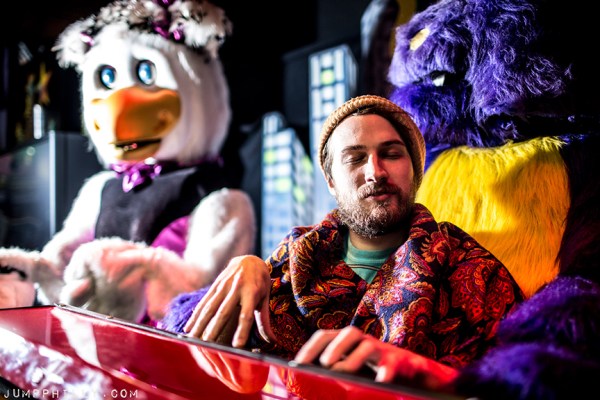
“I think about time a lot,” the Kensington resident notes as he sits on a vinyl turquoise coach that matches the hoodie he’s wearing. “I think about how time rules human existence. It’s a very important part of my life.”
Time has moved increasingly fast for Molholt since he realized he did not want to be an actor. He formed his previous band, The Armchairs, in 2008 with some college friends in Chicago and enjoyed three solid years with the band before they called it quits. Barely a year later, he formed Laser Background, an “unbreakup-able” solo project that affords Molholt the opportunity to create a woozy, intoxicating sound that incorporates his influences of psychadelia, prog rock and pop with ambient flourishes.
 Although Molholt’s earliest attempts at songwriting date back to his childhood using a Yamaha keyboard with a built-in four-track recorder that his parents gave him, he has spent the better part of his musical life filling one role or another in any given project – guitarist, keyboardist or whatever was needed. But the one role he hadn’t covered was that of being the entire band. So he created Laser Background as a means of challenging himself as a songwriter. Although he is joined live by a revolving door of guest musicians, Molholt writes the parts for every instrument and performs a vast majority of them himself on his records.
“When I was younger, I wasn’t super confident about my ability to fully flesh out a song, which is something I think I’m still getting better at,” he explains,. “But because I started a project by myself, I think it forced me to do that.”
Over the four years he’s spent refining songwriting as Laser Background, Molholt has released two EPs and two LPs, including his latest full-length album, Correct, which dropped in May. Molholt recorded the album in Brooklyn at Gravesend Recordings, a recording studio that’s part of Bushwick’s Silent Barn Studio Collective, with longtime friends Carlos Hernandez and Julian Fader of the New York band Ava Luna.
Correct follows a natural progression in Molholt’s sound, incorporating hazy textures and dynamic chord changes, along with synthetic blasts from Gravesend’s Roland Juno-6 (“a big creative inspiration,” Molholt notes) and flourishes courtesy of a cithera – a Hungary zither Molholt utilized, paying homage to his Hungarian ancestry. The glue of the record is recurring motifs and chord progressions – a conscious decision Molholt made going into the record.
“I like to make things tie back together perfectly for me because, I figure, if you can feel there’s a certain thematic continuity but you can’t necessarily identify what it is, then it becomes mysterious and interesting but it’s not immediately obvious,” he explains. “I want people to dig a little bit.”
The desire for keeping things interesting is a trait appreciated by backing band member Daniel “Mac” Kennedy.
“[Andy’s] very concerned with being engaging for all parties involved,” says the Queen Village resident. Though the Laser Background live band has an open door policy to incorporate the busy lifestyles of Molholt’s friends and fellow musicians, Kennedy has held one of the longer tenures in the live show sitting in on drums and the occasional keyboard part since late 2014.
“He’s a fun and talented guy, and a great songwriter who injects some playfulness into his songs,” Kennedy says about Molholt.


Though it’s been four years since Molholt formed Laser Background, it doesn’t feel like much time has passed since his time in The Armchairs.
“Time can be deceiving,” Molholt explains, leaning forward in his seat. “It feels like it was a lot more than a year in between my two bands but it’s like that with a lot of time. If you think about when you were 10, a year is one 10th of your life. But now I’m 29, so a year is one 30th. So, that’s why time feels like it speeds up when you’re older.”
But Molholt isn’t in any rush to stardom. He’s in this to perfect his craft and do what he loves.
“I’m a lifer,” he states. “I’m going for the long burn.”


