Jazz, Ribs, R&B and Love in West Philly.
 Images by G.W. Miller III. Text by Kim Maialetti.
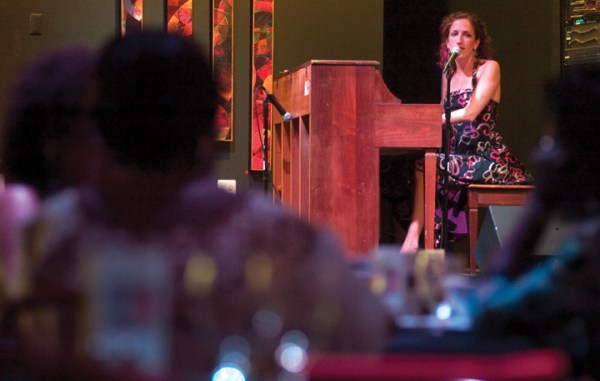
The smoky scent of barbecue wafts through the dining room as if being carried along on the notes of a song.
A waitress delivers plates of ribs and sides of cornbread with showgirl style in towering five-inch heels.
And a young woman in a sequined sweater takes the stage, promising to make it a night to remember.
This is the first open-mic night at the year-old Le Cochon Noir in West Philadelphia and friends and family turn out in force to listen to Alexis Joi, Stash Robinson and the City Hall band perform.
At least that’s how it seems. But we’re in for a surprise. Read more…
Joey Slutman: The Hardcore Historian.
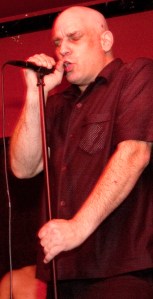 Joe Annaruma, formerly known as Joey Slutman, watched the evolution of punk and the rise of hardcore from the center of the mosh pit, and also from the stage. He played shows alongside Minor Threat, sang in costume for GWAR and continues to perform with his current band, Man is Doomed. Elizabeth Price talks to Annaruma, a recent graduate from Temple University’s history program.
Where are you from? Where were you born?
When was I born? Wow, you go right for the jugular. Well, I was born a long time ago. I was born in Brooklyn, New York. I left when I was 17. I joined the Navy. I was stationed in Virginia, that’s where I got hooked up with music. My first band was in 1980, Judicial Fear. All of us were in the Navy at the time, except for the drummer, Jimmy. We bought guitars for $50 in pawn shops. Six month later we were opening up for Minor Threat, DOA, Nina Hagen Band, all the old punk bands. Read more…
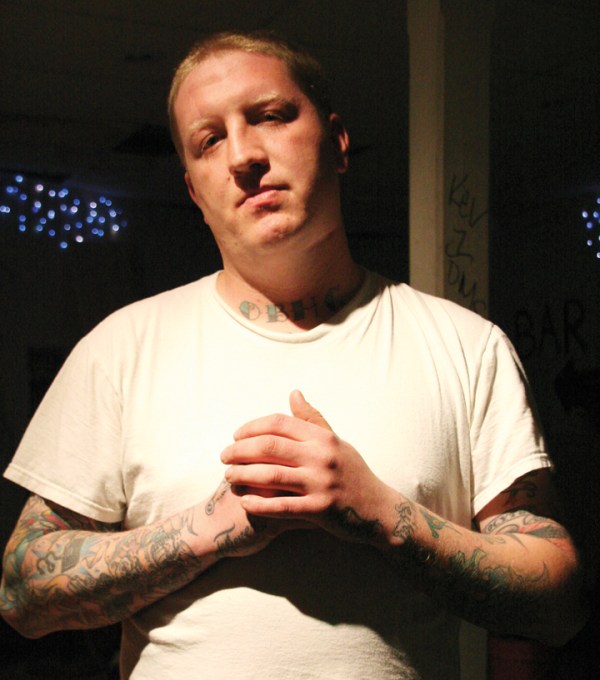 Image by Sarah Hull. Text by Lauren Arute.
Joe Mckay’s mother took him to see Metallica when he was 7-years old.
That, in combination with copious amounts of watching Mtv’s Headbangers Ball with his cousins, led to Mckay’s interest in music that went beyond the mainstream.
And his mother booked hardcore shows.
“It was thrust upon me,” he says. “The people who I was interested in were people who weren’t normal, everyday people. They were people who were listening to music that no one else listened to.”
Mckay booked his first hardcore show in Philadelphia when he was only 15-years old.
Now 30, Mckay, known as Joe Hardcore, still books shows, including the annual multiple-day hardcore fest, This is Hardcore. This year’s event is a four-day spectacle starting on August 11. Read more…
Tune Up Philly: Finding Purpose Through Music.
 Images and text by Rick Kauffman.
Tune Up Philly is the first of its kind in the United States, an intensive after-school program aiming to nurture urban school children by engaging them with music.
Director Stanford Thompson aspires to ingrain in the students a level of confidence, to teach them to learn more effectively and to foster their musical talents.
“The skills they learn after school everyday make an unmistakable impression on them,” Thompson says. “It’s a cost-effective way of bringing change to a Southwest Philadelphia neighborhood.”
Starting in September 2010, 85 students at St. Francis de Sales school, ranging from kindergarten through eighth grade, began learning how to play string, woodwind, percussion and brass instruments.
Nearly 200 students had applied to be a part of the first-year program. There are only 500 students at the small Catholic school located on Springfield Avenue at 47th Street.
“I thought we’d be lucky to get 50 students to participate,” said Thompson. “But when almost 200 signed up in less than a week, I knew we were onto something.”
Out of the 85 students accepted into the program, only seven of them had played an instrument previously.
“You’re going to plan an instrument,” Thompson tells the children. “And you’re going to play it well.”
TUP did not lose one single child throughout the school year. All have stayed in the program, adhering to the strict regimen of study. Thompson says that over the past year, the students have matured both as musicians and young people.
In May, TUP was awarded a $150,000 grant from the Knight Arts Foundation. That money was matched by arts patron Carole Haas Gravagno, ensuring that TUP will continue during the next school year.
“Kids need two things to become whole adults,” says Haas Gravagno. “To feel confident that they’re good at something. And they need to know that somebody cares about them. In this program they get both.” Read more…
Mayor Michael Nutter: I Could Make a Party Happen.
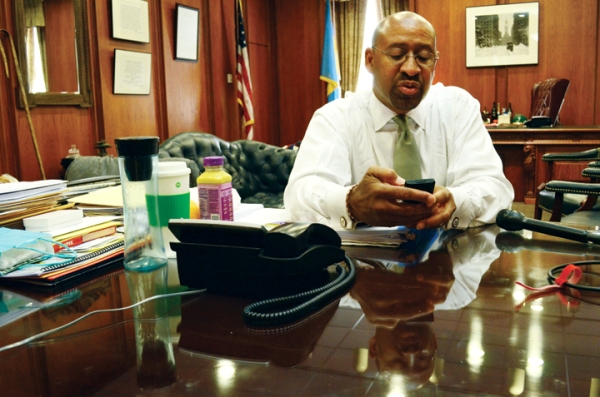 Photo by Rick Kauffman. Interview by G.W. Miller III.
Our mayor knows the lyrics to “Rapper’s Delight” and he’s not afraid to grab the mic and bust into song. G.W. Miller III talks to mayor Michael Nutter about his old DJ days, when he was known as Mix
Master Mike, and how the city can help the creative class.
DJing was a way you broke into politics, wasn’t it?
Yeah, to some extent. I worked at a place called the Impulse Disco at Broad and Germantown. I started working there in the summer of 1976. The owner, his son and I are high school best friends to this day. He’s godfather to my daughter. Robert Bynum. He owns a couple of establishments – Warmdaddy’s, and he manages Relish up in West Oak Lane. I was working for his father, Ben. Ben Bynum owned a number of bars and clubs. The Impulse, before it was a disco, was more of a club on Germantown Avenue, called the Cadillac Club. Billy Paul recorded an album there. All the great stars of that era in the 70s came through the Cadillac Club. Ben had traveled to Europe where disco was, of course, the craze. He decided to close the Cadillac Club, completely gut it out and turn it into in essence the first black-owned disco in Philadelphia.
When the Impulse opened a few weeks later, I started working there. I was a sophomore in college. I didn’t start out DJing. I was really kind of cleaning up from the night before, get it ready, stock the bars, deal with the ice and the liquor and sodas and all that. I’m 19 years old an not drinking.
We had house DJs but they didn’t come until later so someone kind of had to get the party started during the early stages. So Robert and I would alternate. We’d play records until the house DJs came. Then I’d go back to what I normally would do, which was walk around and make sure everything was ok, make sure people weren’t doing anything they weren’t supposed to be doing. Guys could not wear hats. Make sure guys weren’t too aggressive with the ladies. Read more…
Drinking Vodka With Nomads.
 Text by and image courtesy of Keith Birthday (a.k.a. Brendan Mulvihill).
We woke up early, set out early.
A long bus ride out into the steppe, deep in the heart of the Republic of Tuva, in Russia. We were to meet nomads.
Grass and grass and maybe a small hill. The horizon was beset with very tall mountains with snow on the top. The bus was filled with people: four American visitors, one newly arrived Nigerian student and about twenty local students. We had already started to drink cheap local beer out of two-liter plastic bottles. The boys in the back had started to sing. The professors in the front shook their heads, probably thinking fondly of their youth or something.
 Take a map of Asia and find the geographical center. According to the natives, this is where you’ll find Tuva. The southern part of Russia, technically Siberia, on the border with Mongolia. Most of the buildings looked Russian. All of the people looked central Asian.
I had been in Russia for about seven months at this point. This bus ride fell under the guise of working for Tomsk University and ‘spreading goodwill’ on behalf of the Fulbright program, of which I was a participant.
But it was mostly because I had recently emerged from a period of serious, purposeful solitude. Being around fellow Americans stationed in various Siberian cities felt good. I had felt pretty awful for months already.
Also Tuva is where throat singing is from. Read more…
Brendan McKinney Learns That You Can’t Do It Alone.
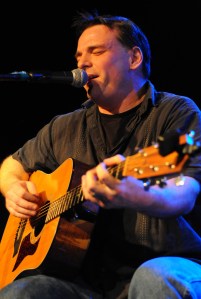 Text by and image courtesy of Brendan McKinney.
My first ever professional solo gig was in the early 90s at the Grape Street Pub in Manayunk. It was one of the roughest nights. I’ll never forget it.
At the time, Guy Campo, of a band called the Rockadile’s, helped with bookings at the Grape Street. Guy knew me from playing his open mics at the Rusty Nail in Ardmore on Wednesdays. He believed in me enough to give me my first break.
I was eager … but very green.
The system I brought was barely running and I really didn’t know how to use it. The sound was tinny and pretty horrible. While Tom, the owner, looked on, a customer yelled across the bar, “Tune your guitar man!”
I was perplexed. I thought it sounded in tune. My confidence crumbled.
On my first break, the same loudmouth told me he had his horn “just down the street.” I could tell he’d probably been drinking too much but I foolishly invited him to get his trumpet and jam with me anyway. I thought it would help but It made things sound much worse. And it dashed any hope I had as coming off as a pro. Read more…
Mike Onufrak Finds a Real Studio.
 Photo of Ryan Moys at The Studio by Julia Hoff. Text by Mike Onufrak.
Throughout my life, I have been on a mission to find a way to record my music without breaking the bank. I started with a Tascam 4-track Portastudio and continued on until the birth of the MBox and the modern-day home studio. Since the beginning of my obsession with recording on-the-cheap, I’ve also learned a great deal about microphones, microphone placement, recording software, audio editing and plug-ins. But I have never really been able to achieve a sound I could stand proudly behind.
 After I realized all of my efforts were only going to help me make a demo – which in today’s world, has absolutely no value – I decided it was time to seek out some better options. One day, a friend offered to let me record in his basement studio for a good price. I was cautious but once he told me about all the gear – a 60’s Fender Bassman, Neumann mics, tons of digital plug-ins, some nice pre-amps and an actual mixing console – I figured it was worth a shot.
After spending a few months working on some of my songs, I finished two or three and was happy enough to post them online and e-mail them out to people who I thought might be able to help me. With these recordings I was easily able to form a band and get gigs around town. But whenever I tried to compare the production quality to anything I grew up listening to, it always fell short. Read more…
Creepoid: Like a Dysfunctional Family.
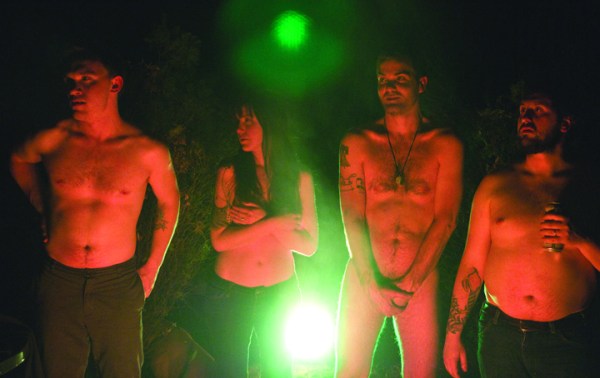 Text and image by Brandee Nichols.
There isn’t a cloud in the sky on this sunny afternoon on quiet DuPont Street in Manayunk. Anna Troxell, the bassist and singer for Creepoid, sits on the front steps of her row home. Her husband, Pat Troxell – Creepoid’s drummer – steps outside after placing a My Bloody Valentine vinyl on his record player. He sits down and puts one leg over the other.
“Your shoe still says $7.99 on the bottom,” Anna states.
Pat just laughs in response.
The remainder of the band – guitarist Peter Joseph Urban IV and guitarist, singer Sean Miller – stand nearby in their casual, thrift-store clothing, attempting to harass the Troxell’s pit bull, Genny (short for Genesis) by making fun of her nipples.
“I have nipples, Greg. Can you milk me?” Urban asks, quoting Robert DeNiro from Meet The Fockers.
The four-piece, indie, psychedelic, folk rock sensation that is Creepoid has received plenty of love from the local music press. Their four song EP, Yellow Life Giver, and full-length album, Horse Heaven, released in January, have garnered them attention across the country, as well.
While nearly impossible to pinpoint a distinct comparison, Creepoid’s music has a way of catching your attention and slowly drawing you in – much like a car crash, but in a good way. Read more…
Dave Patten: The Cut Creator.
 Image courtesy of Dave Patten. Text by Niesha Miller.
Dave Patten is taking a break from cutting the video for his new single, “Melt.”
The performer, producer and film director sits in a corner of Mugshots CoffeeHouse & Café in Fairmount, practically screaming to be heard over the espresso machines, afternoon conversations and 90s rock music blaring from the café’s speakers.
Appearing as handsome and charismatic in person as he does in his videos, the musician wears faded blue jeans and a navy blue and white striped shirt that hangs off his slender frame with a perfectly styled faux-hawk and intense hazel eyes.
“I like to make stuff and create stuff,” says Patten, 23. “That’s what I like to do. If I didn’t have anything to do, it would probably drive me nuts.”
He writes and performs his own music, then crafts his own cinematic music videos. He’s garnered more than one million views on YouTube and his videos sparked an unlikely relationship with Philly rapper Meek Mill (on the left in the image above). The two have collaborated on several songs over the past year. Read more…


 JUMP: The Philly Music Project